01
Cold room
In our walk-in cold room, products are stored separately and in order on their shelves.
With our cold room and temperature-recorded packaging, cold-chain products are stored and transported safely.
Cold-chain products are stored separately and in good order in our walk-in cold room.
Temperature is monitored and recorded 24/7; shipments leave in insulated packaging with data loggers.
For a vaccine, an insulin or a biological medicine, even a few degrees make a difference. That is why we never break the chain at any step.
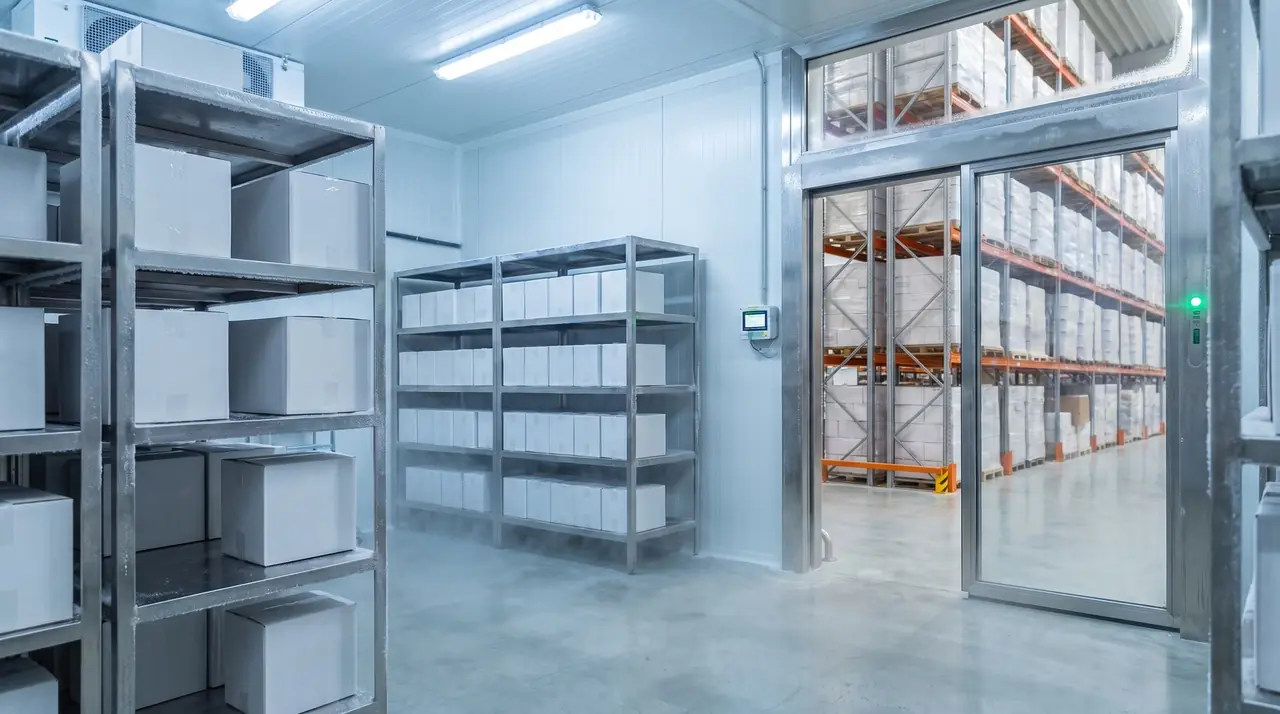
In our walk-in cold room, products are stored separately and in order on their shelves.
Temperature is recorded without interruption; the team is alerted immediately to any deviation.
Shipments are prepared in insulated boxes suited to the product and the distance.
The temperature of every shipment is recorded throughout its journey.
Temperature records are kept and shared with partners when needed.
The cold chain is the storage and transport system that keeps temperature-sensitive medicines within a set temperature range from manufacture until they reach the patient. For medicines, the most common range is +2 °C to +8 °C.
Vaccines, insulins and many biological medicines can lose their effectiveness outside this range, which is why every link in the chain matters.
A cold room is a walk-in storage area whose temperature is controlled continuously. Products sit on shelves arranged to let the air circulate.
The room temperature is measured and recorded without interruption; door-opening times and the layout are planned to keep the temperature stable.
Cold-chain products are packed in insulated boxes suited to the distance and duration. A data logger placed in the package records the temperature throughout the journey.
This record can be reviewed on delivery, documenting that the product stayed in the right conditions all the way.
A data logger is a small device that measures and records the temperature at set intervals. It is placed inside cold-chain shipments.
On delivery, the device's record shows the temperatures the product was exposed to during the journey, documenting whether the chain was broken.
When receiving a cold-chain shipment, check that the package is intact and look at the temperature record.
A walk-in cold room offers far more space and order than refrigerator-type cabinets. Products are grouped on shelves, the air keeps circulating and the temperature stays more even.
This gives cold-chain products both capacity and order.
Read all of this leaflet carefully.
The most common cold-chain range for medicines is +2 °C to +8 °C. Metis stores and transports cold-chain products within this range.
Temperature-sensitive products such as vaccines, insulins and many biological medicines need the cold chain. A product's storage condition is stated on its pack and in its leaflet.
A product with a detected temperature deviation is not released for use; the records are reviewed and the product is handled in line with regulations.
The data logger in the shipment records the temperature throughout the journey; the record can be reviewed on delivery and is kept on file.
No. Products that must be stored between +2 °C and +8 °C should not be frozen; freezing can damage them.
Through compliant export processes, we reach institutional buyers abroad.
Explore →
Traceable stock management, barcode-checked dispatch and storage in line with Good Distribution Practice.
Explore →
Institutional supply of medicines, medical supplies and dermocosmetics.
Explore →
Talk to our sales team about institutional supply and export.